शुक्रबार , अषोज २३, २०८३

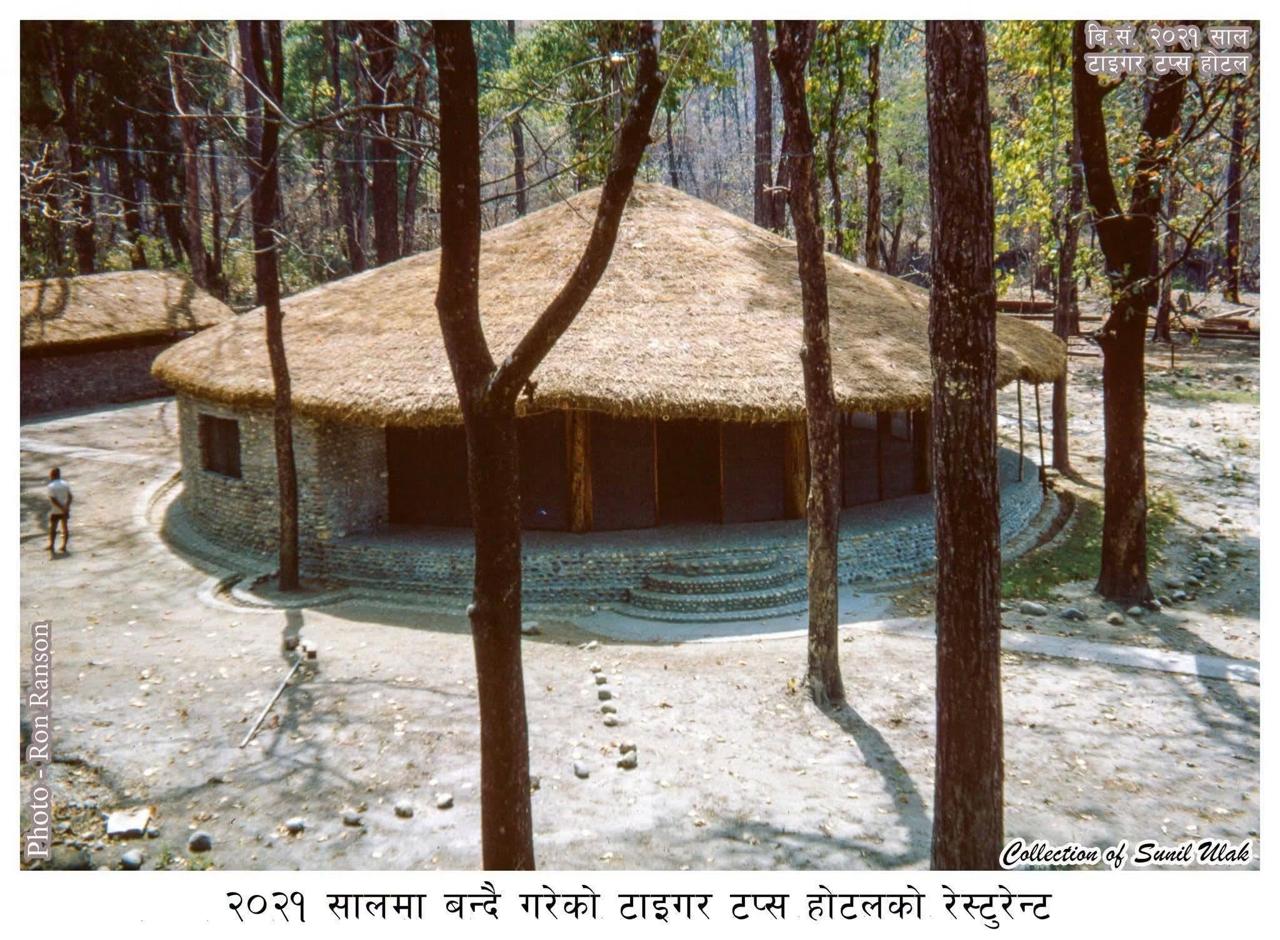
Deep in the jungles of Nepal, there’s a story that still echoes through the trees. It’s a tale of royalty, adventure, and a hotel that once put the country on the map for luxury travel. This is the story of the legendary Tiger Tops Hotel, a place that was as mysterious as it was magnificent.
It all began 62 years ago, in the summer of 1965. A man named John Coapman, who was a trusted confidant of King Mahendra, was granted a 15-year lease on 170 acres of land right in the heart of the Chitwan jungle. He also secured rights to a vast 1,000 square-mile area of forest to run the hotel and other operations. Coapman quickly brought in two investors from Dallas, Texas—wealthy oil tycoons Herbert W. Klein and Tody Lee Winne Jr.—as his partners. And so, the journey of Tiger Tops began.
For years, Tiger Tops became a destination for the world’s elite. But its history became deeply intertwined with that of the nation itself. One of the most significant and debated moments occurred in 1971. King Mahendra spent his final days at the lodge with Coapman. According to accounts, the two men were enjoying a quiet evening with whiskey when the King suffered a fatal heart attack. Coapman immediately called for royal physicians, including Dr. Sushil Chandra Halder, Dr. Sachchekumar Pahadi, and Mrigendra Raj Pandey. Despite their efforts, the King couldn’t be saved, and a celebrated Indian doctor, M.L. Bhatia, was also called in, but to no avail.
The King’s sudden death in the middle of the jungle sent shockwaves through Nepal and sparked immense controversy. Conspiracy theories swirled, with many pointing fingers at Coapman. Some even accused him of being a CIA agent involved in the King’s death. Whether these accusations were true or not, the suspicion was enough to force Coapman to flee Nepal in 1972. He handed over the reins of Tiger Tops to a man named Jim Edwards and left the country, never to return.
But who was John Coapman? He was an Indian-born man, the son of American missionaries, raised in Ambala and Mussoorie. A keen hunter, he had developed a taste for the wilderness early on. It was during his hunting trips to Nepal that he met King Mahendra. The King, impressed by his skills, granted him permission to hunt in the Terai region. Coapman began organizing hunting expeditions for wealthy foreigners and, seeing a growing demand, dreamt of building a hotel right in the middle of the jungle.
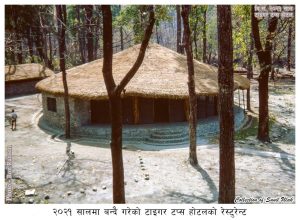
His vision was unique. He named it Tiger Tops, as it was built literally on top of the world of the Bengal tiger. The hotel was built by connecting four massive Kapok (silk cotton) trees. This treehouse-style structure had four rooms with cone-shaped roofs. They used stones from the Rapti River for the floor and wood, bamboo, and grass from the jungle for construction, giving it a stunning, rustic feel. From the rooms, you could glimpse the majestic Himalayas.
Just three months after the hotel was finished, the first guests arrived: five wealthy Americans. To accommodate them, a small airstrip was built to land a chartered Royal Nepal Airlines DC-3 aircraft directly in Meghauli. The staff wore distinctive uniforms resembling military outfits—complete with Khukuris on one hip and rifles slung over their shoulders, a striking sight that made them look like the Nepali army itself.
A year after Coapman’s departure, in 1972, a chance meeting in New York City changed the hotel’s fate. The same Dallas investors, Klein and Winne, met Jim Edwards, who was looking to start a tourism business in Nepal. They told him they couldn’t manage the hotel and wanted to sell it. Edwards, intrigued, agreed to buy it.
The story, however, is more complex than a simple sale. There were rumors that Coapman was ousted from his own creation, leaving behind unpaid staff salaries, a complete lack of guests, and starving elephants. Edwards, a man of action, reportedly showed up at Tiger Tops with a suitcase full of cash, flanked by his business partner Chuck and an employee named Elizabeth, determined to revive the property.
He worked tirelessly to restore Tiger Tops to its former glory. However, the mystery of King Mahendra’s death lingered. Coapman’s rushed departure right after the incident, carrying only a small bag, left a cloud of suspicion. The King’s sudden demise was a major political shock for Nepal, causing many development plans to stall and leaving India, secretly, relieved.
After fleeing Nepal, Coapman briefly went to Denmark before finally settling in Kenya, where he started another jungle resort. He has always blamed Jim Edwards for his banishment from Nepal, calling him an enemy.
Despite the intrigue, Jim Edwards successfully ran Tiger Tops until his death in 2008. His son, Kristin Edwards, took over management. But the legacy was not to last. In 2012, the Nepali government changed its laws to ban hotel operations inside the jungle. This led to the closure of five premier lodges, including Tiger Tops, Machan Wildlife Resort, Chitwan Jungle Lodge, Island Jungle Resort, and Temple Tiger Resort.
Today, Tiger Tops stands deserted, like a ghost palace in the jungle. A few employees still visit the site, and the owners hold onto the hope that the government might one day change its policy and allow the hotel to reopen.
There is one final, poignant detail in this story. If you visit the official Tiger Tops website today, you will find no mention of John Coapman—the man who dreamt it up, built it, and gave it its name. Jim Edwards, it seems, never saw the need to credit his predecessor.
Sample FAQ:
Q: Why was Tiger Tops Hotel closed?
In 2012, the Nepali government banned all hotel operations inside the jungle, leading to the closure of Tiger Tops and four other lodges in Chitwan.
Q: Who built Tiger Tops Hotel?
It was founded by John Coapman in 1965, along with American investors Herbert Klein and Tody Winne Jr.
Q: Did King Mahendra die at Tiger Tops?
Yes, King Mahendra suffered a heart attack at the lodge in 1971 while staying with John Coapman.
Q: Is Tiger Tops Hotel still open?
No, it is currently abandoned and not operational, though there is hope it may reopen if government policies change.





हिमाल दर्पणले ‘नहतारिऔँ, ब्रेकिङ समाचारको पछि नदगुरऔँ’ भन्ने उद्देश्यले काम सुरु गरेको छ । पर्यटन, इतिहास, संस्कृति, मिडियालक्षित बहस, किनाराकृत विषयवस्तु एवं कला-साहित्यसँग नजिक भएर समाचार सामग्री (शब्द, दृश्य र अडियो) प्रकाशन गर्नु हाम्रो मुख्य ध्येय रहेनछ ।
हिमाल दर्पणले ‘नहतारिऔँ, ब्रेकिङ समाचारको पछि नदगुरऔँ’ भन्ने उद्देश्यले काम सुरु गरेको छ । पर्यटन, इतिहास, संस्कृति, मिडियालक्षित बहस, किनाराकृत विषयवस्तु एवं कला-साहित्यसँग नजिक भएर समाचार सामग्री (शब्द, दृश्य र अडियो) प्रकाशन गर्नु हाम्रो मुख्य ध्येय रहेनछ ।
DEPARTMENT OF INFORMATION AND BROADCASTING Regd Number : 2531/077-078
Editor: Raja Ram Paudel
Swayambhu - 15
Kathmandu, Nepal
© Copyright 2026, HimalDarpan. All Right Reserved. | Website by Nirvan Studio